The Sacred Living Centre

Twelve components of the KotiGanapati Temple and Yagnaśālā — one way of life.

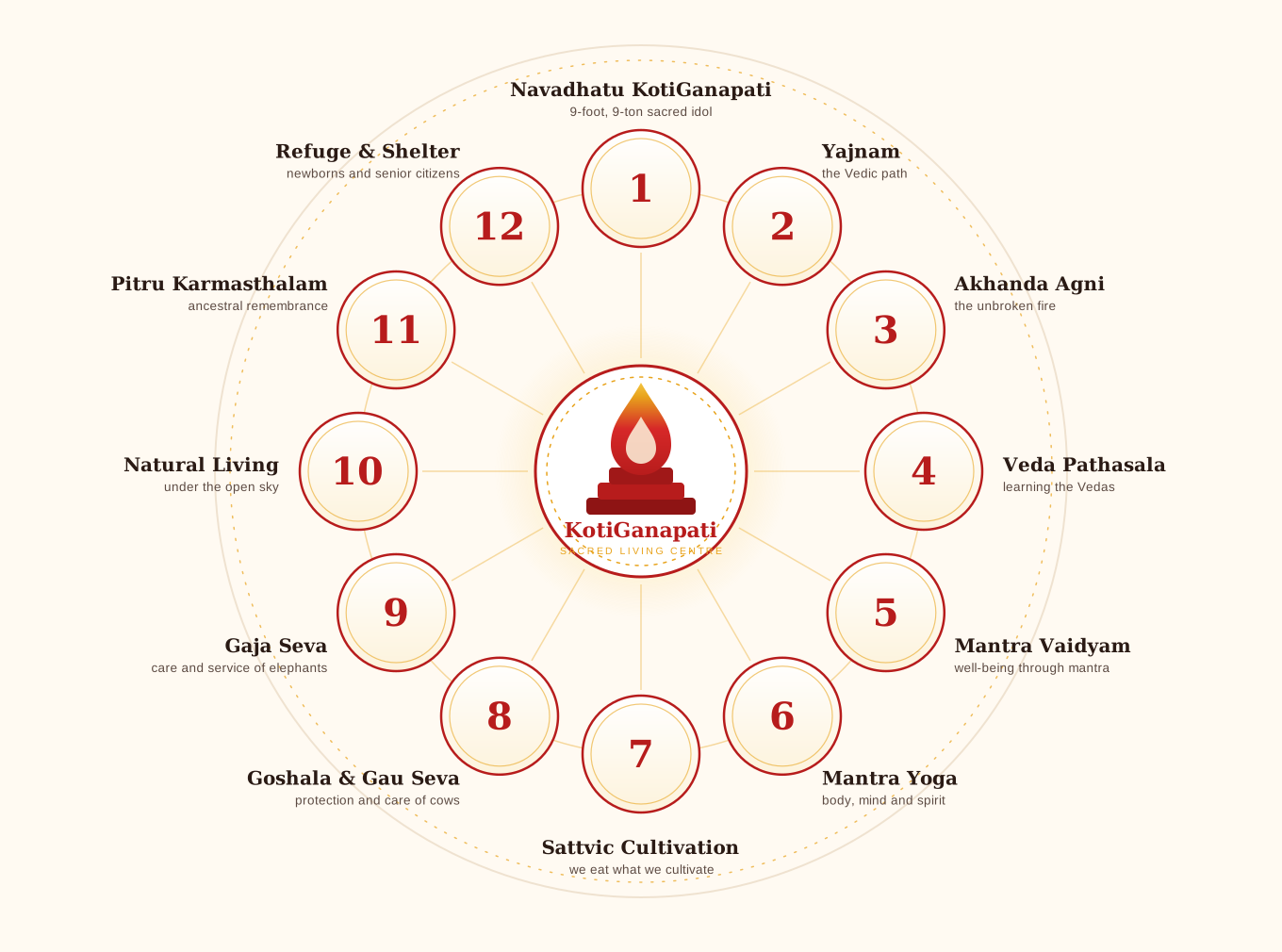
The KotiGanapati Temple, Yagnaśālā and Sacred Living Centre is not a building with functions attached to it. It is twelve strands of a single life — prayer, learning, food, animals, ancestors and refuge — held together by an unbroken fire. Each is described below, with the Vedic word that stands behind it.

A twelve-petalled mandala showing the twelve components of the KotiGanapati Sacred Living Centre arranged around a central sacred fire
The twelve components, arranged around the Akhaṇḍa Agni at the centre.
1 of 12  ·  🕉️

Navadhātu KotiGanapati

A magnificent 9-foot-tall, 9-ton sacred KotiGanapati idol, traditionally crafted from Navadhātu — an alloy of nine metals.

Navadhātu — the union of nine metals in a single sacred form — is the traditional medium for an idol meant to stand for centuries. Nine is the number of completeness in the Vedic imagination: nine planets, nine gems, nine forms of devotion. Cast as one body from nine substances, the idol becomes a visible teaching — that many elements, offered together, become a single divine presence. This is the same truth the MahaYagnam enacts with one crore voices.

Ṛgveda 2.23.1 — invoked traditionally as the Gaṇapati mantra
ग॒णानां॑ त्वा ग॒णप॑तिं हवामहे क॒विं क॑वी॒नामु॑प॒मश्र॑वस्तमम् ।
ज्ये॒ष्ठ॒राजं॒ ब्रह्म॑णां ब्रह्मणस्पत॒ आ न॑: शृ॒ण्वन्नू॒तिभि॑: सीद॒ साद॑नम् ॥
gaṇānāṃ tvā gaṇapatiṃ havāmahe kaviṃ kavīnām upamaśravastamam |
jyeṣṭharājaṃ brahmaṇāṃ brahmaṇaspata ā naḥ śṛṇvann ūtibhiḥ sīda sādanam ||
“We invoke you, Gaṇapati, lord of the hosts, sage among sages, most renowned beyond measure — supreme king of prayers. O Brahmaṇaspati, hearing us, come with your protections and be seated in the seat of sacrifice.”
This is the verse recited at the opening of countless ceremonies. In the Ṛgveda its addressee is Brahmaṇaspati, lord of sacred speech; in living tradition it has long been chanted as the Gaṇapati invocation with which every auspicious beginning is made. Its closing words — sīda sādanam, “be seated in the seat” — are precisely what the Navadhātu idol makes possible: a permanent seat prepared for the divine presence. Source: Ṛgveda 2.23.1
2 of 12  ·  🔥

Yajnam

The sacred Vedic path connecting the individual with the Cosmos and the Divine.

Yajña is the oldest and most generous idea in the Vedic world: that life is sustained not by taking but by offering. What is given into the fire returns as rain, as grain, as health, as peace. Every act performed for the good of another — and not for oneself — is a yajña. At the Sacred Living Centre, yajña is not an occasional ceremony but the rhythm by which the whole community lives.

Bhagavad Gītā 3.10
सहयज्ञाः प्रजाः सृष्ट्वा पुरोवाच प्रजापतिः ।
अनेन प्रसविष्यध्वमेष वोऽस्त्विष्टकामधुक् ॥
saha-yajñāḥ prajāḥ sṛṣṭvā purovāca prajāpatiḥ |
anena prasaviṣyadhvam eṣa vo 'stv iṣṭa-kāma-dhuk ||
“Having in the beginning created humankind together with sacrifice, Prajāpati said: ‘By this shall you flourish; let this be your wish-fulfilling cow.’”
Humanity and yajña were created together — neither is complete without the other. The verse promises that a life built on offering is itself the kāmadhenu, the wish-fulfilling cow: it does not merely earn abundance, it generates it. Source: Bhagavad Gītā 3.10
3 of 12  ·  🪔

Akhaṇḍa Agni

A continuously maintained sacred fire — never allowed to go out.

An unbroken fire is a promise kept in public. Tended through every night and every season, the Akhaṇḍa Agni is the living thread that joins one day's prayers to the next and one generation's offerings to the next. Agni is the first word of the Ṛgveda for a reason: he is the messenger who carries what is offered from the human world to the divine.

Ṛgveda 1.1.1 — the opening verse of the Vedas
अ॒ग्निमी॑ळे पु॒रोहि॑तं य॒ज्ञस्य॑ दे॒वमृ॒त्विज॑म् ।
होता॑रं रत्न॒धात॑मम् ॥
agnim īḷe purohitaṃ yajñasya devam ṛtvijam |
hotāraṃ ratnadhātamam ||
“I praise Agni — the one placed in front, the divine ministrant of the sacrifice, the invoker, the greatest bestower of treasure.”
The Vedas begin with fire. Purohita means “placed in front” — Agni goes ahead of the worshipper, and ratnadhātama means “best bestower of treasure”. The tradition understood that treasure to be far wider than wealth: health, progeny, insight, and peace. Source: Ṛgveda 1.1.1
4 of 12  ·  📜

Veda Pāṭhaśālā

A traditional centre for learning, preserving and practising the Vedas, Vedāṅgas, Sanskrit and Vedic rituals.

The Vedas survived for thousands of years without a single manuscript being necessary — carried mouth to ear, teacher to student, with a precision of pitch and syllable that scholars still regard as one of humanity's great feats of transmission. A pāṭhaśālā is where that chain is kept unbroken. Students learn recitation, grammar, metre, ritual and meaning together, so that the mantra is never sound without understanding.

Taittirīya Upaniṣad 1.11.1 — the graduation address
सत्यान्न प्रमदितव्यम् । धर्मान्न प्रमदितव्यम् ।
स्वाध्यायप्रवचनाभ्यां न प्रमदितव्यम् ॥
satyān na pramaditavyam | dharmān na pramaditavyam |
svādhyāya-pravacanābhyāṃ na pramaditavyam ||
“Be not negligent of truth. Be not negligent of dharma. Be not negligent of study and of teaching.”
These are the parting instructions given to a student leaving the teacher's house — among the oldest convocation addresses in the world. Note that study (svādhyāya) and teaching (pravacana) are named as a single duty: what one has learned, one is obliged to pass on. Source: Taittirīya Upaniṣad 1.11.1
5 of 12  ·  🌿

Mantra Vaidyam

Supporting well-being through sacred mantras and traditional spiritual practices.

The Vedic seers addressed the healing herbs directly, as living powers with their own dignity, and understood the healer as one who works alongside them rather than above them. Mantra Vaidyam continues that outlook — steady recitation, discipline of mind, and reverence for the natural world as companions to well-being. It is offered as prayer and practice, alongside and never in place of medical care.

Ṛgveda 10.97.19 — the Oṣadhi Sūkta, hymn to the healing herbs
या ओष॑धी॒: सोम॑राज्ञी॒र्विष्ठि॑ताः पृथि॒वीमनु॑ ।
बृह॒स्पति॑प्रसूता अ॒स्यै सं द॑त्त वी॒र्य॑म् ॥
yā oṣadhīḥ somarājñīr viṣṭhitāḥ pṛthivīm anu |
bṛhaspati-prasūtā asyai saṃ datta vīryam ||
“You herbs, whose king is Soma, spread throughout the earth, impelled by Bṛhaspati — bestow your healing power upon this one.”
An entire hymn of the Ṛgveda is addressed to plants. Elsewhere in the same hymn the physician is called vipraḥ, the inspired one, “dispeller of affliction” — healing is treated as a sacred vocation, not merely a technique. Source: Ṛgveda 10.97.19
6 of 12  ·  🧘

Mantra Yoga

Harmonising the body, mind and consciousness through sacred mantras.

Mantra Yoga is the discipline of using sound to settle and gather the mind. Breath, posture, pronunciation and attention are trained together until repetition stops being effort and becomes rest. It asks nothing exotic — only regularity, and the willingness to let a single syllable hold the whole of one's attention.

Māṇḍūkya Upaniṣad 1
ॐ इत्येतदक्षरमिदँ सर्वं तस्योपव्याख्यानं
भूतं भवद् भविष्यदिति सर्वमोङ्कार एव ॥
oṃ ity etad akṣaram idaṃ sarvaṃ tasyopavyākhyānaṃ
bhūtaṃ bhavad bhaviṣyad iti sarvam oṃkāra eva ||
“Oṃ — this syllable is all this. Its explanation is this: all that is past, present and future is verily Oṃ.”
The shortest of the principal Upaniṣads opens by placing the whole of time inside one syllable. This is why mantra practice begins where it does: not with many words, but with one, held steadily until it opens. Source: Māṇḍūkya Upaniṣad 1
7 of 12  ·  🌾

Natural and Sāttvika Cultivation

Cultivating natural, plant-based food for the community: “What we cultivate, we eat.”

Food grown by the same hands that offer it in the fire, and served freely to whoever arrives, closes a circle the Vedas took very seriously. The land is worked without cruelty, the harvest is shared before it is stored, and Annadānam — the free offering of food — is treated as the most immediate form of worship available to anyone.

Taittirīya Upaniṣad 3.2 · Ṛgveda 10.117.3
अन्नं ब्रह्मेति व्यजानात् । अन्नाद्ध्येव खल्विमानि भूतानि जायन्ते ।
अन्नेन जातानि जीवन्ति । अन्नं प्रयन्त्यभिसंविशन्तीति ॥
annaṃ brahmeti vyajānāt | annād dhy eva khalv imāni bhūtāni jāyante |
annena jātāni jīvanti | annaṃ prayanty abhisaṃviśantīti ||
“He knew food to be Brahman. For truly, from food these beings are born; being born, by food they live; and into food they enter when they depart.”
Bhṛgu, sent by his father to discover the nature of Brahman, returns first with this answer: food. The Ṛgveda draws the practical conclusion — sa id bhojo yo gṛhave dadāti, “he alone is the true giver who gives to one who comes seeking food… and he makes a friend for times to come” (10.117.3). Source: Ṛgveda 10.117.3
8 of 12  ·  🐄

Goshāla and Gau Seva

Protection, nourishment and compassionate care of cows.

A whole hymn of the Ṛgveda is addressed to the cows themselves — their pasture, their water, their safety, their contentment. The Goshāla is that hymn put into practice: shelter, clean water, proper feed, veterinary care, and lifetime maintenance. Go-Dānam, the gift of a cow, is among the most revered forms of dāna in the tradition, and may be offered in one's own name or in honour of parents, forefathers or loved ones.

Ṛgveda 6.28.1 and 6.28.7 — the Go Sūkta
आ गावो॑ अग्मन्नु॒त भ॒द्रम॑क्र॒न्त्सीद॑न्तु गो॒ष्ठे र॒णय॑न्त्व॒स्मे ॥
मा वः॑ स्ते॒न ईशत॒ माघशं॑सः॒ परि॑ वो हे॒ती रु॒द्रस्य॑ वृज्याः ॥
ā gāvo agmann uta bhadram akran sīdantu goṣṭhe raṇayantv asme ||
mā vaḥ stena īśata māghaśaṃsaḥ pari vo hetī rudrasya vṛjyāḥ ||
“The cows have come and have brought good fortune; may they rest in the cow-pen and be content among us… May no thief have power over you, nor any evil-speaker; may the weapon of Rudra turn aside from you.”
Note what the hymn actually asks for: not milk, but the animals' contentment and safety. Raṇayantu asme — “may they be happy with us”. That is the standard a goshāla is measured against. Source: Ṛgveda 6.28
9 of 12  ·  🐘

Gaja Seva

Compassionate care and service of elephants — subject to government permission and animal-welfare regulations.

Gaja Seva extends the same principle that governs the Goshāla to the elephant: food, veterinary care, shelter and lifetime maintenance, undertaken strictly in accordance with animal-welfare requirements, Foundation guidelines and applicable law. Where permission is not granted, support is directed to sanctuaries and to the care of other beings in need.

Śukla Yajurveda (Vājasaneyi Saṃhitā) 36.18
मित्रस्य मा चक्षुषा सर्वाणि भूतानि समीक्षन्ताम् ।
मित्रस्याहं चक्षुषा सर्वाणि भूतानि समीक्षे ।
मित्रस्य चक्षुषा समीक्षामहे ॥
mitrasya mā cakṣuṣā sarvāṇi bhūtāni samīkṣantām |
mitrasyāhaṃ cakṣuṣā sarvāṇi bhūtāni samīkṣe |
mitrasya cakṣuṣā samīkṣāmahe ||
“May all beings look upon me with the eye of a friend. May I look upon all beings with the eye of a friend. May we look upon one another with the eye of a friend.”
One of the most quietly radical lines in the Vedas: sarvāṇi bhūtāni — all beings, without exception or hierarchy. Every form of animal seva at the Centre rests on this verse. Source: Śukla Yajurveda 36.18
10 of 12  ·  🌳

Natural Living

Living close to nature and under the open sky as much as possible.

Most activity at the Centre takes place outdoors — open-air yagna spaces, natural kutirs, sacred trees, ponds, cultivation land — with indoor space used only when necessary. Simplicity here is not austerity for its own sake; it is the practical form of a very old conviction that the earth is not raw material but kin.

Atharvaveda 12.1.12 — the Bhūmi Sūkta · Īśa Upaniṣad 1
माता भूमिः पुत्रोऽहं पृथिव्याः । पर्जन्यः पिता स उ नः पिपर्तु ॥
ईशा वास्यमिदं सर्वं यत्किञ्च जगत्यां जगत् ।
तेन त्यक्तेन भुञ्जीथा मा गृधः कस्यस्विद्धनम् ॥
mātā bhūmiḥ putro 'haṃ pṛthivyāḥ | parjanyaḥ pitā sa u naḥ pipartu ||
īśā vāsyam idaṃ sarvaṃ yat kiñca jagatyāṃ jagat |
tena tyaktena bhuñjīthā mā gṛdhaḥ kasyasvid dhanam ||
“Earth is my mother, I am the son of Earth; Parjanya is my father — may he nourish us.” · “All this, whatever moves in this moving world, is to be enveloped by the Lord. Enjoy through renunciation; covet no one's wealth.”
The Bhūmi Sūkta is a 63-verse hymn to the Earth — among the earliest environmental texts in any language. The Īśa Upaniṣad supplies the discipline that follows from it: take what is needed, hold nothing in greed. Source: Atharvaveda 12.1
11 of 12  ·  🪷

Pitṛ Karmasthalam

A sacred, separately designated place for Daśadinālu, Māsikam, Saṃvatsarikam and other Apara–Pitṛ Karmalu.

Ancestral rites deserve a place set apart, prepared and unhurried — not a corner borrowed from another purpose. The Pitṛ Karmasthalam provides for Apara Kriyās, Māsikam, Saṃvatsarikam, Pratyābdikam, Tarpaṇam, Piṇḍa Pradānam and Mahālaya Pakṣa observances, arranged according to family tradition and applicable guidelines.

Ṛgveda 10.15.1 — the Pitṛ Sūkta
उदी॑रता॒मव॑र॒ उत्परा॑स॒ उन्म॑ध्य॒माः पि॒तर॑: सो॒म्यास॑: ।
असुं॒ य ई॒युर॑वृ॒का ऋ॑त॒ज्ञास्ते नो॑ऽवन्तु पि॒तरो॒ हवे॑षु ॥
udīratām avara ut parāsa un madhyamāḥ pitaraḥ somyāsaḥ |
asuṃ ya īyur avṛkā ṛtajñās te no 'vantu pitaro haveṣu ||
“May the nearer, the farther and the middle Soma-loving Fathers arise. May those Fathers who, gentle and knowers of ṛta, have gone on to life beyond, protect us at our invocations.”
The ancestors are addressed by degree of nearness — parents, grandparents, and those beyond memory — and are called avṛkāḥ, “without wolfishness”, and ṛtajñāḥ, “knowers of the cosmic order”. Remembrance in this tradition is not grief; it is continued relationship. Source: Ṛgveda 10.15.1
12 of 12  ·  🤱

Refuge for Abandoned Newborns and Senior Citizens

A place of protection and dignity for abandoned newborn babies and abandoned senior citizens.

A safe-entrance facility, operated in accordance with child welfare law, where an abandoned infant can be received immediately with medical attention and in coordination with authorised child welfare departments — together with a home of dignity, care and companionship for elders who have been left without one. This is the dedication at the very heart of the KotiGanapati Temple.

Taittirīya Upaniṣad 1.11.2
मातृदेवो भव । पितृदेवो भव ।
आचार्यदेवो भव । अतिथिदेवो भव ॥
mātṛdevo bhava | pitṛdevo bhava |
ācāryadevo bhava | atithidevo bhava ||
“Be one to whom the mother is a god. Be one to whom the father is a god. Be one to whom the teacher is a god. Be one to whom the guest is a god.”
A society is judged by how it treats those who cannot repay it. The same passage of the Upaniṣad names the guest — the stranger who simply arrives — as divine. An abandoned newborn and an abandoned elder are, in the plainest sense, the guests this verse means. Source: Taittirīya Upaniṣad 1.11.2
Held Together

Twelve Strands, One Life

These twelve are not departments. The grain grown in the fields is offered in the fire, cooked for Annadānam and fed to the cows; the students of the Veda Pāṭhaśālā are the ones who tend the Akhaṇḍa Agni; the ancestors remembered at the Pitṛ Karmasthalam are honoured in the same sankalpa that shelters an abandoned newborn. The Ṛgveda closes with the instruction that makes such a life possible at all.

Ṛgveda 10.191.2 and 10.191.4 — the Saṃjñāna Sūkta, the closing hymn of the Ṛgveda
सं ग॑च्छध्वं॒ सं व॑दध्वं॒ सं वो॒ मनां॑सि जानताम् ॥
स॒मा॒नी व॑ आ॒कूतिः॑ स॒मा॒ना हृद॑यानि वः ।
स॒मा॒नम॑स्तु वो॒ मनो॒ यथा॑ वः॒ सुस॒हास॑ति ॥
saṃ gacchadhvaṃ saṃ vadadhvaṃ saṃ vo manāṃsi jānatām ||
samānī va ākūtiḥ samānā hṛdayāni vaḥ |
samānam astu vo mano yathā vaḥ susahāsati ||
“Come together, speak together; let your minds be of one accord… United be your purpose, united your hearts; may your minds be one, that you may dwell well together.”
The Ṛgveda ends not with a claim about the gods but with an instruction about people — that they should be able to live together. Everything on this page is an attempt to build a place where that verse can actually be practised. Source: Ṛgveda 10.191

Be Part of the Sacred Living Centre

Devotees, families and volunteers around the world are invited to take part — through seva, through participation, or through a contribution of whatever you wish to donate.

Donor Categories & Benefits → Contact & Invite Us